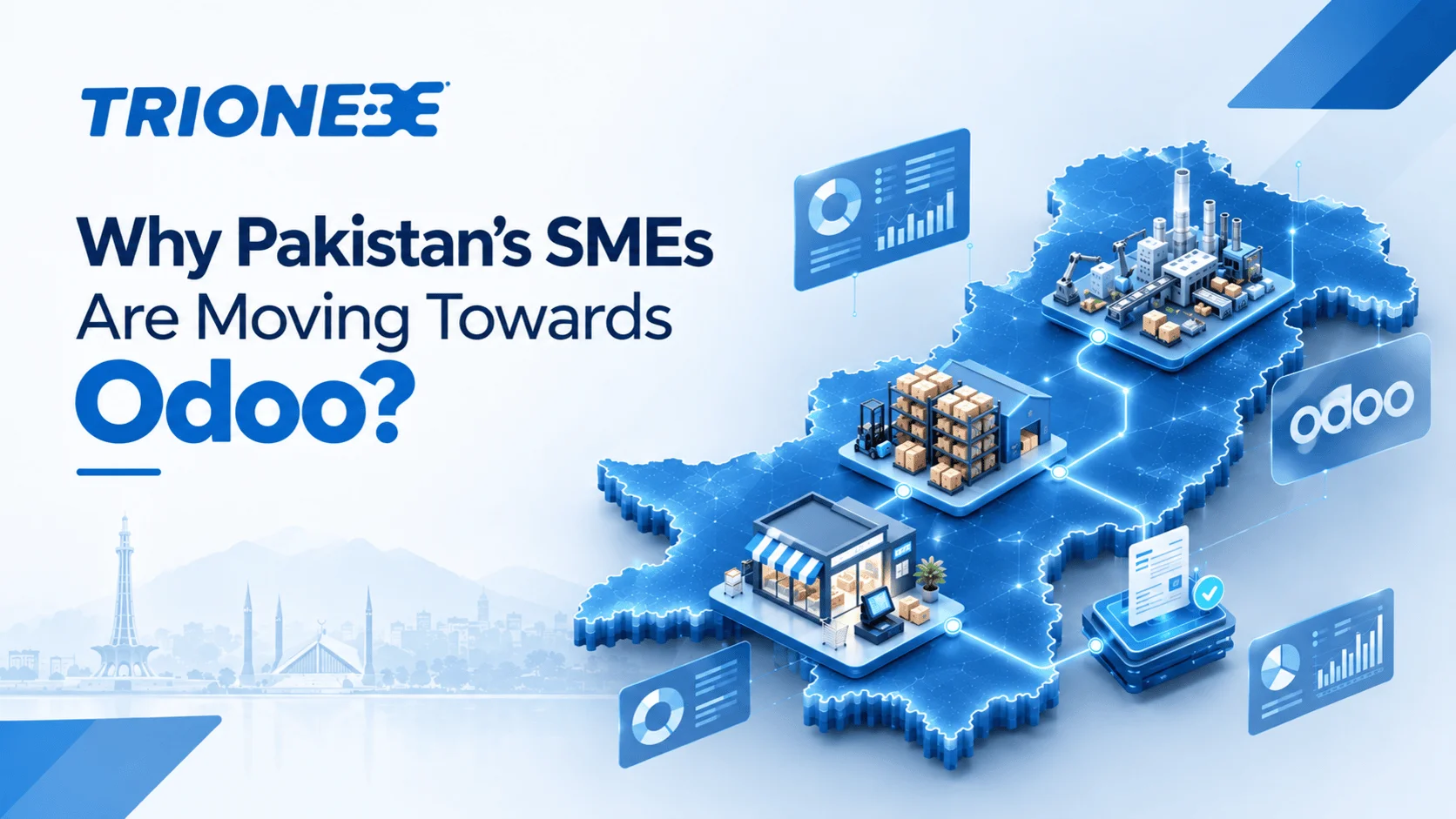
Small and medium enterprises generate a large share of Pakistan’s non-agricultural employment and export earnings, yet most still run on a patchwork of Excel sheets, a decade-old accounting package, and a WhatsApp group where orders get confirmed. That setup works until it doesn’t — usually around the point where a business crosses PKR 50 million in annual turnover, opens a second location, or starts exporting.
Over the last few years, a clear pattern has emerged: when Pakistani SMEs finally replace that patchwork, a growing number choose Odoo ERP. Here’s why.
What Is Odoo, in Plain Terms?
Odoo is an open-source business management suite. Instead of one giant system you buy in full, it’s a set of connected apps — Accounting, Inventory, Sales, CRM, Purchase, Manufacturing, HR, Point of Sale, eCommerce, Project — that share a single database.
Two editions matter for Pakistani buyers:
- Odoo Community — free and open source, self-hosted, covers core operations.
- Odoo Enterprise — paid per user per month, adds accounting automation, studio customization, mobile apps, and official support.
That structure is the first reason SMEs pay attention. You can start with two apps and add more as you grow, rather than signing a six-figure contract for modules you won’t touch for three years.
1. Cost Fits the Rupee Reality
Currency depreciation has made dollar-denominated enterprise software painful. A traditional ERP licence, plus mandatory annual maintenance at 18–22% of licence value, plus a long implementation, puts most global platforms out of reach for a business doing PKR 200–800 million a year.
Odoo changes the math in three ways:
- Community Edition costs nothing in licence fees. Your spend goes to implementation and hosting, both of which can be sourced locally in rupees.
- Enterprise pricing is per user, per month, so a 12-person team pays for 12 users — not a 50-seat minimum.
- Phased rollout spreads the cost. Start with Accounting and Inventory this quarter, add Manufacturing next year.
For a finance director trying to justify capex in a tight year, “start small, prove value, expand” is a far easier case to make than a single large outlay.
2. It Handles Pakistani Compliance Without Heavy Rework
This is the deciding factor for many buyers, and it’s where generic international software falls down.
Pakistani SMEs have to deal with a specific compliance stack: sales tax at federal and provincial levels, withholding tax on payments to suppliers and contractors, input/output tax adjustment, and FBR’s push toward digital invoicing and POS integration for retailers and registered businesses. Provincial authorities — PRA, SRB, KPRA, BRA — each add their own services-tax treatment.
Odoo supports this reasonably well:
- A Pakistan localization with a local chart of accounts is available in recent versions.
- Tax rules are configurable, so multi-rate sales tax, further tax, extra tax, and WHT logic can be built into invoice templates rather than calculated by hand.
- API-friendly architecture makes FBR digital invoicing integration achievable — local Odoo partners in Pakistan have built connectors for exactly this.
- Urdu and RTL support exists for user-facing layers where needed.
One caution worth stating plainly: FBR’s e-invoicing and POS integration requirements have changed repeatedly, and thresholds and deadlines shift. Confirm current rules with your tax advisor and make sure any partner you hire has shipped a working FBR integration recently, not two years ago.
3. One Database Ends the Reconciliation Tax
Ask a Pakistani SME owner where their week goes and you’ll often hear some version of the same answer: reconciling.
Sales team keeps a register. Warehouse keeps another. Accounts posts from delivery challans that arrive two days late. By month-end, stock on paper and stock on the floor disagree, and someone spends three days finding out why.
Odoo’s single-database design removes the gap structurally. A confirmed sales order reserves stock, triggers a delivery order, and generates the invoice from the same record. Landed costs — customs duty, clearing charges, inland freight — can be allocated to inventory valuation, which matters enormously for importers who have watched margins get eaten by costs they never properly attributed.
For distribution and trading businesses, this alone often justifies the project.
4. Sector Fit for Pakistan’s Actual SME Base
Odoo’s module range maps neatly onto the sectors where Pakistani SMEs concentrate:
Textiles and apparel — Manufacturing handles multi-level BOMs, work orders, and subcontracting, which matches the way stitching, dyeing, and finishing get outsourced in Faisalabad and Karachi supply chains. Lot and serial tracking supports buyer audit requirements.
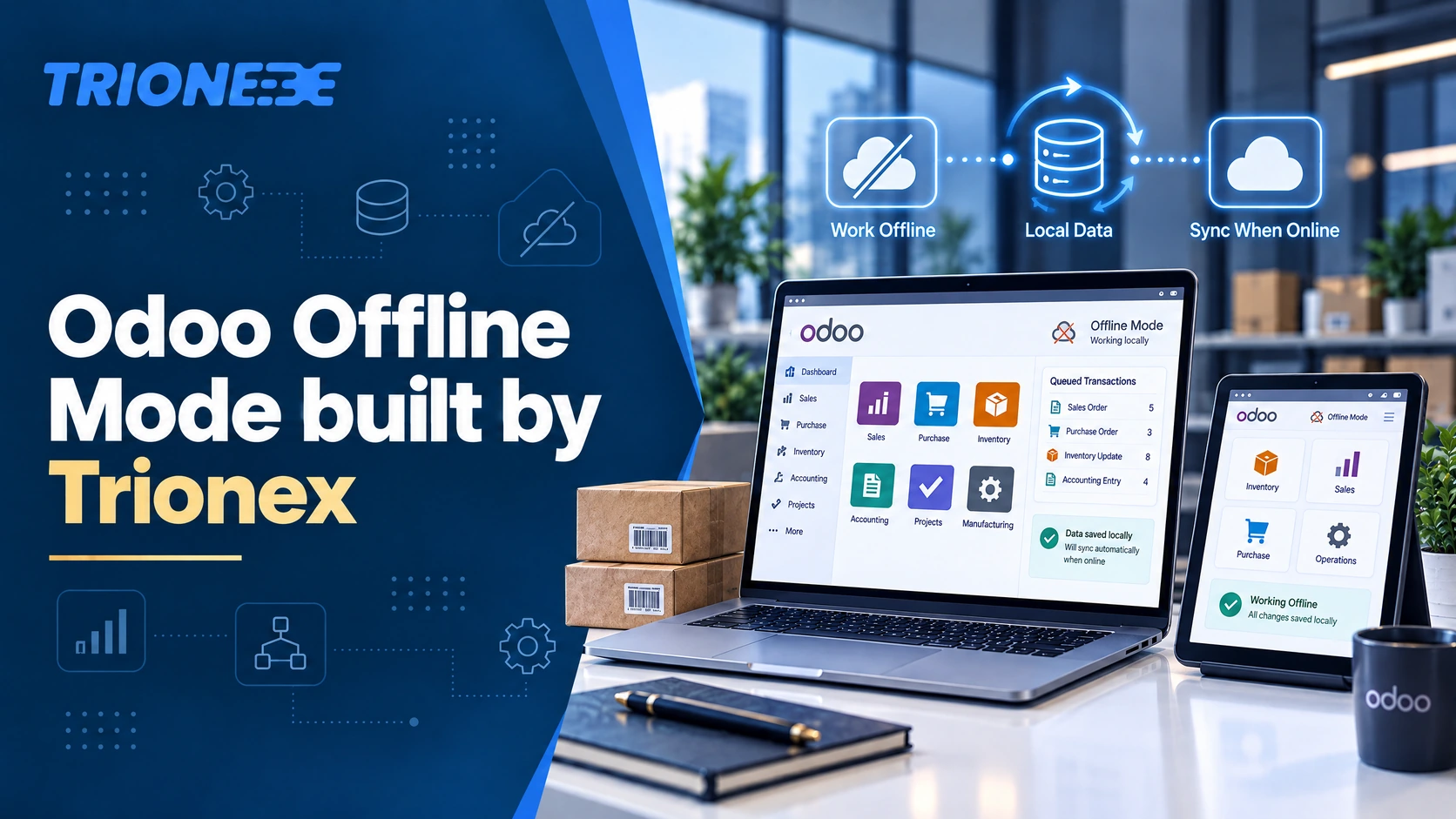
Retail and FMCG distribution — Odoo POS works offline and syncs when the connection returns, a practical necessity given load-shedding and patchy internet. Multi-warehouse support covers depot-and-outlet structures.
Pharmaceutical and food distribution — Expiry date tracking, batch recall, and FEFO removal strategies are built in.
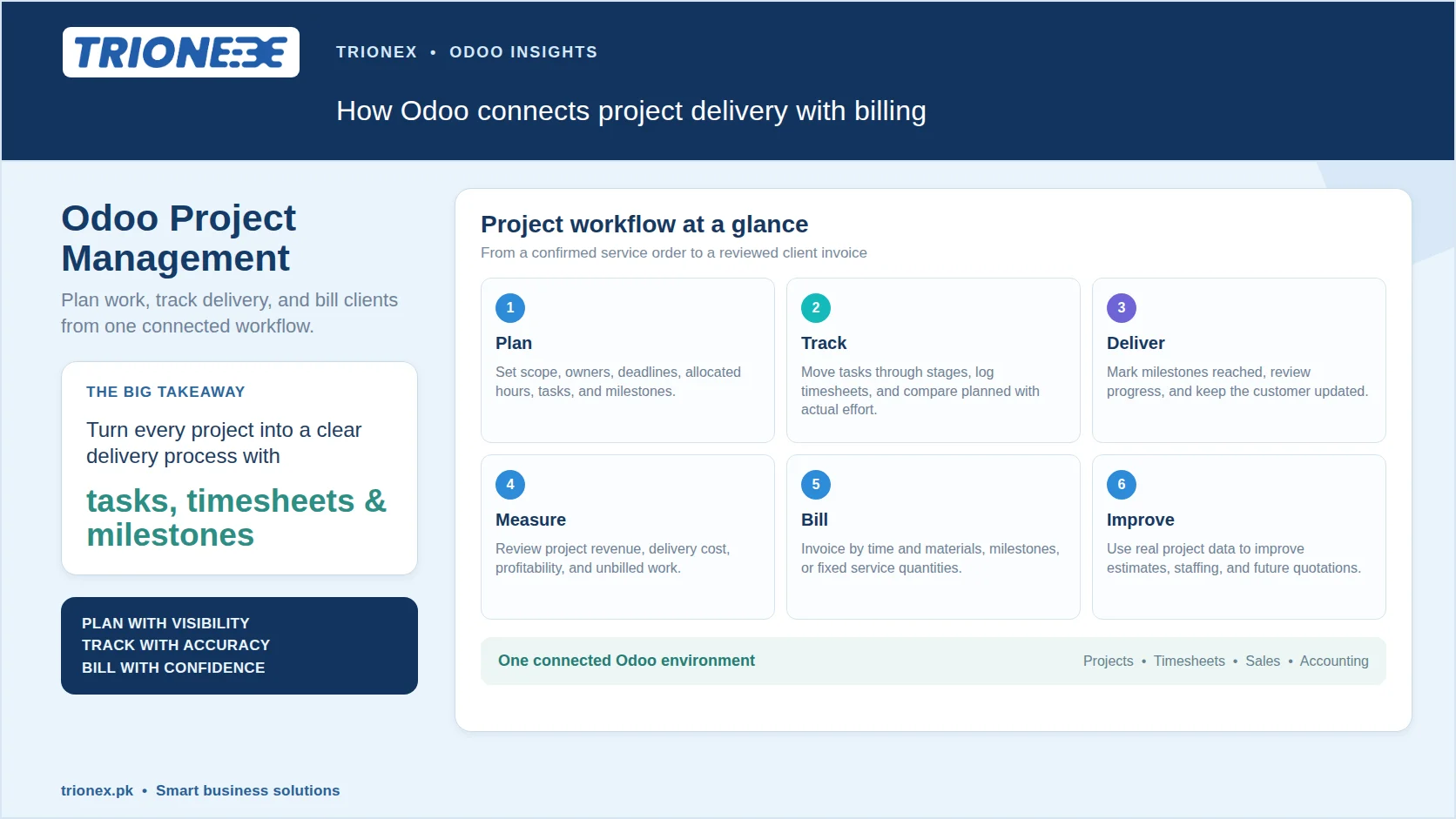
Services, IT, and construction — Project, Timesheets, and Field Service link billable hours to invoices without a separate tool.
Exporters — Multi-currency accounting records invoices in USD or EUR while reporting in PKR, and handles exchange gain/loss on realization automatically. For a Sialkot surgical instruments exporter or a Lahore software house billing overseas clients, that removes a recurring manual headache.
5. A Real Local Implementation Ecosystem
Software fails in Pakistan for the same reason everywhere: nobody configures it properly and nobody trains the staff.
Odoo’s advantage here is practical. There is now a substantial pool of Odoo partners in Pakistan across Karachi, Lahore, Islamabad, and Faisalabad, and a large pool of Python and PostgreSQL developers who can be trained on the framework. That means:
- Implementation quoted in rupees, not dollars
- Consultants who understand FBR filings and local business process
- Support during Pakistan Standard Time working hours
- Realistic possibility of hiring an in-house Odoo developer later
- Vendor lock-in risk drops too. Because Odoo is open source with an accessible codebase, a business that outgrows its first partner can move to another without losing its system.
6. Growth Without a Replatform
Most SMEs that buy cheap accounting software end up replacing it entirely within five years. Odoo is built to absorb growth instead: add users, add companies, add warehouses, add apps. Inter-company transactions between a trading arm and a manufacturing arm are handled natively. Odoo Studio allows field and workflow changes without writing code.
The company you’ll be in 2031 can usually run on the same system you install in 2026.
What to Watch Out For
An honest assessment includes the risks:
- Implementation quality varies widely. The technology rarely fails; the configuration does. Check references and ask to see a live deployment in your sector.
- Community Edition is not free. You’ll pay for hosting, backups, security patching, and upgrades.
- Migrations between major versions need planning, particularly with heavy customization.
- Over-customization is the classic trap. Adapt your process to Odoo where you can. Customize only where you have real competitive reason to differ.
- Change management decides the outcome. If your storekeeper keeps a parallel register, the project has already failed.
Frequently Asked Questions
How much does Odoo cost for a Pakistani SME?
Community Edition has no licence fee; you pay for hosting and implementation. Enterprise is priced per user per month in USD. Total first-year cost depends mostly on scope and partner rates, so get itemized quotes from at least three implementers.
Can Odoo handle FBR digital invoicing and sales tax?
Yes, with proper configuration and an integration built by a competent partner. Verify current FBR requirements independently, as rules have changed frequently.
Odoo Community or Enterprise?
Community suits businesses with strong internal IT and straightforward needs. Enterprise suits those wanting official support, accounting automation, mobile apps, and studio customization.
How long does implementation take?
A focused rollout covering accounting, inventory, and sales typically runs 6–12 weeks. Manufacturing or multi-company scope extends that considerably.
Is Odoo better than SAP Business One or Microsoft Dynamics 365 for an SME?
For most Pakistani SMEs, yes — on cost, flexibility, and local talent availability. Large enterprises with complex consolidation may still prefer the established alternatives.
Tagged with :